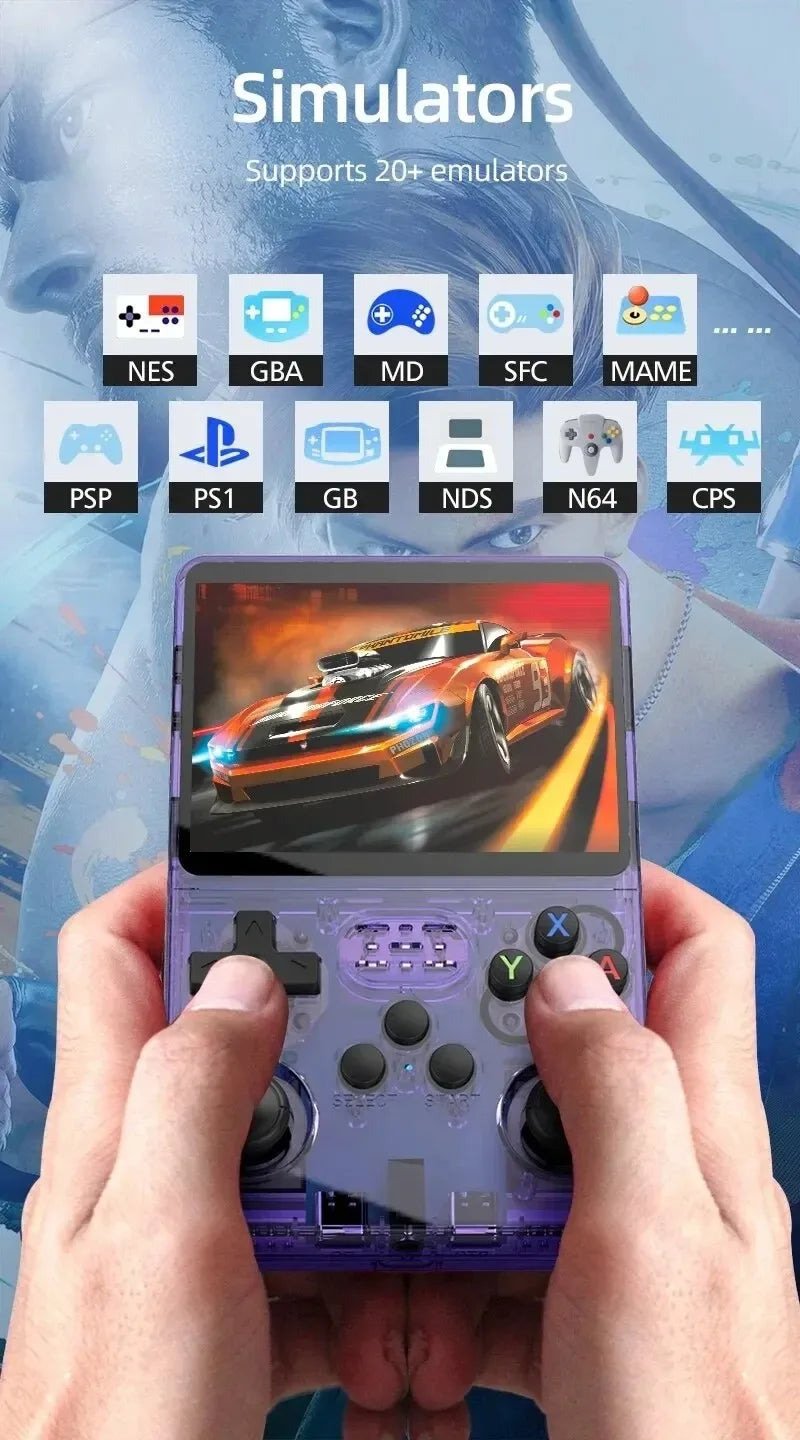
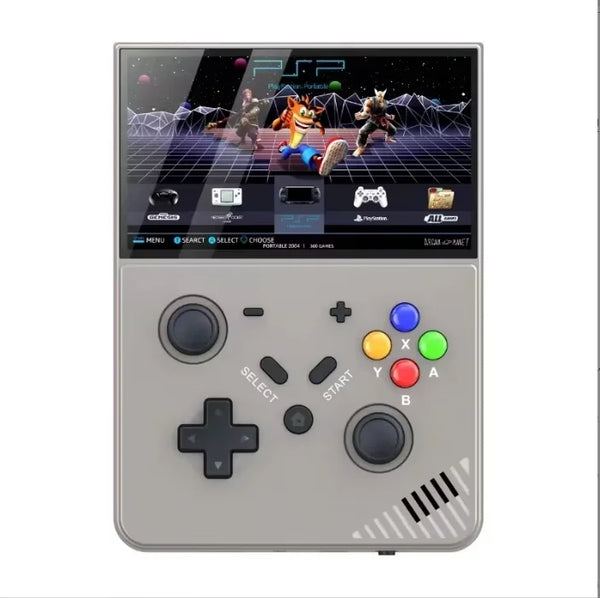
If you have been shopping for a budget retro handheld and found yourself going in circles between the R36S and the R35S Plus, you are not alone. The two names appear everywhere, sometimes on the same product listing. This guide cuts through the confusion and tells you exactly what you are buying.
The short answer
The R36S is the newer version. It uses the same core chipset as the R35S Plus but comes with a better-laminated IPS screen, a refined d-pad, and is the device most community guides and firmware updates are now written for. If you are buying today, the R36S is the one to get.
What they share
Both devices are built around the RK3326 processor, a quad-core chip that has become the workhorse of the sub-$100 retro handheld market. The practical result: identical emulation performance. Both run Linux, both are compatible with ROCKNIX firmware, and both play the same library of systems well.
- Same chipset (RK3326 quad-core)
- Same emulation capability, including PS1, SNES, GBA and most arcade titles
- Same Linux-based OS with ROCKNIX support
- Similar battery life (around 3,000mAh, roughly 3 to 4 hours of gameplay)
- Comparable weight and pocket-friendly form factor
For emulation results, there is no meaningful difference between the two. If someone tells you the R35S Plus plays PS1 games better than the R36S, or vice versa, that is not accurate. The chip is the bottleneck and it is the same chip.
What is different
Screen quality
The R36S uses a fully laminated IPS panel, which reduces the air gap between the glass and the display layer. The result is sharper colours, less glare, and a more premium feel. The R35S Plus used an IPS screen too, but with a small gap between layers, making it look slightly less crisp in direct light. Not a dealbreaker, but noticeable side by side.
D-pad
The R36S d-pad received a redesign over the R35S Plus. Players who care about diagonal inputs in fighting games or precision platformers will notice the improvement. For most emulation use cases, either is fine.
Availability
The R35S Plus is largely a legacy product now. Most stock in Australia is R36S. If a listing says R35S Plus, confirm with the seller whether it ships the original or the newer unit, since many list both under the same product.
At Arcade35, our R36S Retro Handheld Console is the current model, pre-loaded with 20,000 games and running ROCKNIX out of the box.
Emulation performance: what both can and cannot do
Both devices shine at the same systems and hit the same walls. In summary: brilliant for PS1, SNES and GBA, solid for most arcade titles, limited for N64 and NDS. For a full breakdown, read our R36S emulation guide.
Should you consider something else?
Depending on what you want, two other options are worth knowing about.
Want a bigger screen?
The M18 Retro Handheld Console has a 4.3-inch HD screen, which is noticeably larger than the 3.5-inch panel on the R36S. Same price range, better for people who find smaller screens hard on the eyes.
Want to run modern games?
The Windows 11 Handheld Console runs a full desktop OS on a Ryzen Z2 chip. It plays PC games, emulates up to GameCube and PS2, and connects to your existing game library. The trade-off is price, battery life and complexity.
The verdict
Buy the R36S. It is the current model, better-built than the R35S Plus, and supported by an active community of firmware developers. The R35S Plus is not a bad device, but there is no reason to choose it if you can get the R36S at the same price.
Head to our R36S product page to see storage variants and colour options available for delivery in Australia.